
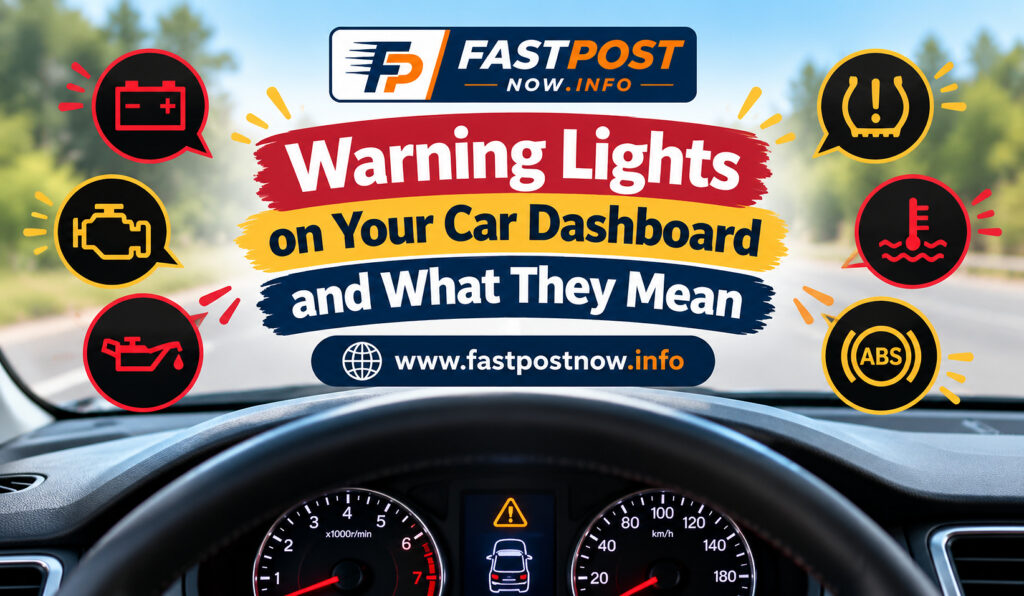
Your car’s dashboard plays an important role in keeping you informed about your vehicle’s condition. Apart from displaying your speed, fuel level, and engine information, it uses warning lights to alert you when something needs attention. These symbols can indicate problems with the engine, brakes, battery, tyres, cooling system, and other essential components.
Understanding these warning lights can help you recognise potential problems before they become expensive repairs. More importantly, knowing when to stop driving can protect you, your passengers, and your vehicle.
Dashboard warning lights generally appear in different colours. Red usually indicates a serious issue that requires immediate attention, while amber or yellow commonly signals a fault that needs checking. Green and blue lights usually provide information about active vehicle features.
However, warning symbols and their meanings can differ depending on your car’s manufacturer and model. Always check your owner’s manual for accurate instructions. Here are the most common dashboard warning lights, what they indicate, and how you should respond.
1. Check Engine Warning Light
The check engine warning light is one of the most familiar symbols on a car dashboard. It usually appears as an engine-shaped icon in amber or yellow.
This light indicates that the engine management system has detected a problem. The issue may involve the engine, fuel delivery, ignition system, sensors, or emissions equipment. Sometimes, the cause is relatively minor, but ignoring the warning can allow a small problem to develop into a costly repair.
Common Reasons for the Check Engine Light
- Loose or damaged fuel cap.
- Faulty oxygen sensor.
- Worn spark plugs.
- Damaged ignition coils.
- Malfunctioning airflow sensor.
- Catalytic converter problems.
- Fuel system or emissions-related faults.
What Should You Do?
If the light remains continuously illuminated and your car feels normal, arrange a diagnostic inspection soon. A mechanic can use a diagnostic scanner to identify the fault.
However, a flashing check engine light is more serious. It may indicate an engine misfire that could damage the catalytic converter. Reduce engine load, stop safely, and seek professional assistance.
2. Engine Oil Pressure Warning Light
The engine oil pressure warning light generally appears as a red oil can symbol. It indicates that the engine may not be receiving sufficient oil pressure.
Engine oil is essential because it lubricates moving components, reduces friction, and helps manage heat. Without proper lubrication, internal engine parts can wear rapidly or become damaged.
Possible Causes
- Low engine oil level.
- Oil pump malfunction.
- Oil leakage.
- Blocked oil passages.
- Incorrect engine oil.
- Faulty oil pressure sensor.
What Should You Do?
Stop the vehicle in a safe location and switch off the engine immediately. Allow it to cool before checking the oil level according to the owner’s manual.
If the oil level is low, add the recommended oil. However, if the warning remains illuminated, do not continue driving. Contact a qualified mechanic or arrange roadside assistance.
Remember that this warning relates to oil pressure, not simply the quantity of oil inside the engine.
3. Engine Temperature Warning Light
The engine temperature warning light usually shows a thermometer above wavy lines. It commonly appears in red when the engine becomes too hot.
An overheating engine can suffer serious damage, including problems with the cylinder head, head gasket, and internal components. This warning should never be ignored.
Common Reasons for Engine Overheating
- Insufficient coolant.
- Coolant leakage.
- Faulty radiator fan.
- Damaged thermostat.
- Water pump problems.
- Blocked radiator.
What Should You Do?
Stop safely and switch off the engine. Allow it to cool before inspecting the cooling system.
Never open a hot radiator or coolant reservoir cap because pressurised coolant can escape and cause severe burns.
If you notice steam, coolant leakage, or a temperature warning that does not disappear, arrange professional assistance instead of continuing your journey.
4. Battery Charging Warning Light
The battery warning light appears as a battery-shaped symbol with positive and negative signs. It generally indicates a problem with the vehicle’s charging system.
Although the symbol looks like a battery warning, the actual problem may involve the alternator, electrical connections, or drive belt. The alternator supplies electrical power while the engine is running and helps recharge the battery.
Possible Reasons for This Warning
- Failing alternator.
- Loose or damaged drive belt.
- Corroded battery terminals.
- Faulty electrical connections.
- Weak battery.
- Charging system malfunction.
What Should You Do?
Switch off unnecessary electrical accessories and arrange an inspection as soon as possible.
If the charging system stops working, the vehicle may eventually lose electrical power. Avoid continuing a long journey because the battery may not have enough charge to keep the car operating.
5. Brake System Warning Light
The brake warning light is one of the most important safety indicators on your dashboard. It may appear as an exclamation mark inside a circle or display the word BRAKE.
Depending on the vehicle, this light may indicate that the parking brake is engaged, brake fluid is low, or a fault has developed in the braking system.
Common Causes
- Parking brake not fully released.
- Low brake fluid.
- Brake fluid leakage.
- Worn or damaged brake components.
- Problems with the braking system.
What Should You Do?
First, check whether the parking brake is fully released. If the warning remains illuminated, stop safely and consult your owner’s manual.
Pay attention to changes in braking performance. If the brake pedal feels unusually soft, the vehicle takes longer to stop, or you notice fluid leakage, do not continue driving.
Arrange professional inspection or towing because brake-related problems can affect your ability to stop safely.
6. Anti-Lock Braking System (ABS) Warning Light
The ABS warning light usually displays the letters ABS inside a circle. It indicates a possible problem with the anti-lock braking system.
ABS helps prevent wheels from locking during hard braking. This allows drivers to maintain better steering control, particularly when braking suddenly on slippery surfaces.
If the warning remains illuminated, conventional braking may still work, but the anti-lock function may not be available.
Possible Causes
- Faulty wheel-speed sensor.
- Damaged ABS wiring.
- Malfunctioning control module.
- Hydraulic system problem.
- Electrical connection failure.
What Should You Do?
Drive carefully and arrange a professional inspection. Maintain a safe distance from other vehicles and avoid sudden braking whenever possible.
If the ABS warning appears together with the red brake warning light, stop safely and seek assistance.
7. Tyre Pressure Monitoring System (TPMS) Warning Light
The TPMS warning light generally appears as an exclamation mark inside a horseshoe-shaped symbol. It indicates that one or more tyres may have insufficient air pressure.
Some vehicles also use this indicator when the tyre pressure monitoring system develops a fault.
Incorrect tyre pressure can affect braking, steering, fuel efficiency, and tyre life. Therefore, responding to this warning promptly is important.
Common Reasons for the Warning
- Slow tyre puncture.
- Natural air loss.
- Temperature changes.
- Damaged tyre valve.
- Faulty pressure sensor.
What Should You Do?
Check all tyre pressures when the tyres are cool. Adjust them according to the recommendations provided by your vehicle manufacturer.
Inspect the tyres for visible damage, cuts, or punctures. If the warning remains after correcting the pressure, arrange an inspection of the monitoring system.
Do not ignore the warning simply because the car appears to drive normally.
8. Airbag Warning Light
The airbag warning light usually shows a seated person with a circle in front. It indicates a possible problem with the Supplemental Restraint System, commonly known as the SRS.
This safety system includes airbags, sensors, wiring, and seatbelt pretensioners. If the warning remains illuminated, one or more components may not operate as intended during a collision.
Possible Causes
- Faulty airbag sensor.
- Damaged wiring.
- Seatbelt pretensioner problem.
- Malfunctioning airbag control module.
- Electrical system fault.
What Should You Do?
Arrange a professional inspection as soon as possible. Avoid repairing airbag wiring or components yourself because these systems require specialised handling.
Continue wearing your seatbelt correctly. However, remember that the airbag system may not provide its intended protection while the warning remains active.
9. Seatbelt Reminder Warning Light
The seatbelt reminder light displays a seated person wearing a seatbelt. It usually appears in red and may be accompanied by an audible warning.
This indicator reminds the driver or passengers to fasten their seatbelts. Many modern vehicles also use seat occupancy sensors to identify whether someone is sitting in a passenger seat.
What Should You Do?
- Fasten your seatbelt before starting the journey.
- Make sure all passengers wear their seatbelts.
- Check for twisted or damaged seatbelts.
- Avoid placing heavy objects on passenger seats if they activate the reminder.
- Have faulty seatbelt sensors inspected.
Seatbelts are essential safety equipment. Always use them, even when travelling short distances.
10. Power Steering Warning Light
The power steering warning light generally shows a steering wheel with an exclamation mark. Depending on the vehicle, it may appear in amber or red.
This indicator signals a possible fault in the steering assistance system. Modern vehicles commonly use electric power steering, while some older models have hydraulic systems.
A problem with power steering can make the steering wheel heavier and more difficult to turn, especially at low speeds.
Common Causes
- Faulty electric steering motor.
- Low steering fluid in applicable hydraulic systems.
- Damaged wiring.
- Faulty steering sensor.
- Control module malfunction.
What Should You Do?
If steering suddenly becomes difficult, reduce speed and stop safely. Do not continue driving if you cannot control the vehicle confidently.
Have the steering system checked by a qualified technician before using the car again.
11. Low Fuel Warning Light
The low fuel warning light appears as a fuel pump symbol, usually in amber or yellow. It indicates that the fuel level has dropped below a certain point.
The remaining driving distance depends on the vehicle, fuel consumption, traffic, and road conditions. Relying too heavily on the estimated remaining range can lead to unexpected situations.
What Should You Do?
Refuel as soon as practical instead of waiting until the tank is nearly empty.
Avoid depending entirely on the distance-to-empty display because the estimated range can change according to driving conditions.
12. Diesel Particulate Filter (DPF) Warning Light
The DPF warning light is found in many diesel vehicles equipped with a diesel particulate filter. It generally appears as a filter-shaped symbol with small dots.
The filter captures soot from exhaust gases and periodically removes accumulated particles through a process called regeneration.
When the filter becomes excessively clogged, the warning light may appear.
Possible Causes
- Frequent short journeys.
- Interrupted regeneration cycles.
- Excessive soot accumulation.
- Exhaust system problems.
- Faulty related sensors.
What Should You Do?
Follow the regeneration instructions provided in your owner’s manual. Some vehicles may require a suitable uninterrupted drive under specified conditions.
If the warning flashes, remains illuminated, or appears with other engine warnings, arrange professional inspection. Do not attempt a regeneration procedure unless the manufacturer recommends it.
13. Glow Plug Warning Light
The glow plug warning light is commonly found in diesel vehicles. It usually appears as a coiled wire symbol and helps drivers understand when the engine’s preheating process is taking place.
Glow plugs heat the combustion chambers, making it easier for a diesel engine to start, particularly when the engine is cold.
The light normally illuminates briefly when the ignition is switched on and should turn off when the vehicle is ready to start.
Why Might the Light Stay On?
A warning that remains illuminated or flashes may indicate:
- Faulty glow plugs.
- Glow plug control module problems.
- Electrical connection issues.
- Engine management faults.
If the light behaves unusually, arrange a professional inspection instead of repeatedly attempting to start the engine.
14. Traction Control and Stability Control Warning Light
The traction control and electronic stability control warning light commonly displays a car with wavy lines underneath it.
These systems help maintain vehicle stability when the wheels lose grip or the car begins to slide. The symbol may flash when the system is actively controlling wheel slip, such as during acceleration on a slippery road.
However, if the light stays illuminated, the system may have been switched off or detected a fault.
What Should You Do?
- Reduce speed on slippery surfaces.
- Avoid sudden acceleration.
- Check whether the system has been manually switched off.
- Consult the owner’s manual.
- Arrange an inspection if the warning remains illuminated.
These systems support vehicle control but cannot replace careful driving.
15. Coolant Level Warning Light
Some vehicles have a separate warning light for low coolant levels. The symbol may show a coolant reservoir or a thermometer-related icon.
This warning is different from the engine temperature indicator, although both relate to the cooling system. Coolant helps regulate engine temperature and prevents overheating.
Possible Causes
- Coolant leakage.
- Damaged hoses.
- Faulty reservoir cap.
- Radiator problems.
- Water pump leakage.
What Should You Do?
If the warning indicates a serious coolant problem or appears together with an overheating warning, stop safely. Allow the engine to cool before checking the coolant level.
Never open a hot cooling system. If the coolant level continues to drop, arrange professional inspection to identify the source of the problem.
Understanding Different Dashboard Warning Light Colours
Dashboard warning light colours help drivers understand the general urgency of a message. However, their meanings may vary between manufacturers and vehicle models.
| Colour | General meaning | Recommended action |
| Red | Serious warning or immediate attention required | Stop safely and assess the problem |
| Amber or yellow | Fault or condition requiring attention | Arrange an inspection |
| Green | A vehicle feature or system is active | Usually informational |
| Blue | A specific feature, such as high beams, is active | Usually informational |
| Flashing | System activity or potentially urgent fault | Check the owner’s manual |
A flashing warning does not always indicate a fault. For example, the traction control light may flash when the system is actively preventing wheel slip. Therefore, consider the symbol, colour, and behaviour together.
What to Do When a Dashboard Warning Light Appears
Recognising a warning symbol is only the first step. Knowing how to respond can help prevent further damage and reduce safety risks.
Follow these practical steps whenever an unfamiliar warning appears:
- Stay calm: Avoid sudden movements or panic while driving.
- Check the colour: Identify whether the warning is red, amber, green, or blue.
- Observe vehicle behaviour: Look for unusual sounds, smoke, overheating, or changes in handling.
- Find a safe stopping place: Stop when necessary, particularly if a serious red warning appears.
- Consult the owner’s manual: Check the specific meaning and recommended response.
- Arrange an inspection: Ask a qualified mechanic to diagnose warnings that remain illuminated.
If you notice smoke, burning smells, loss of braking ability, or serious overheating, prioritise your safety and seek roadside assistance.
Dashboard warning lights help identify vehicle problems, but regular tyre checks are equally important for safe driving. Learn how to choose the right tyres for your car to improve road grip, handling, and driving safety.
Frequently Asked Questions (FAQs)
1. What should I do if a red warning light appears on my dashboard?
Stop in a safe location as soon as possible, switch off the engine when appropriate, and follow the instructions in your owner’s manual.
2. Is it safe to drive when the check engine light is on?
A steady check engine light may allow cautious driving to a service centre, but a flashing light or unusual engine behaviour requires you to stop safely and seek professional assistance.
3. Why do dashboard warning lights appear when starting a car?
Many warning lights briefly illuminate during the ignition process as part of the vehicle’s system self-check and should normally turn off after the engine starts.
4. Can I reset a dashboard warning light myself?
Some maintenance reminders can be reset using the vehicle’s controls, but fault-related warning lights should be diagnosed and repaired before attempting to clear them.
5. Do all cars have the same dashboard warning symbols?
No, dashboard symbols and their meanings vary by manufacturer, model, and vehicle equipment, so checking your owner’s manual is important.