
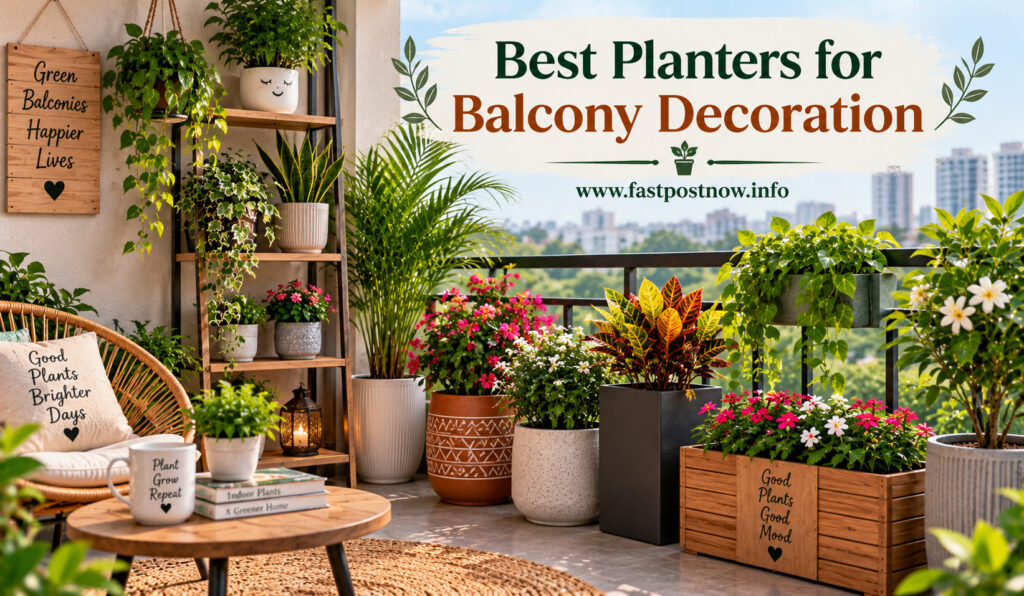
A well-decorated balcony can instantly make a home feel more inviting, and planters are one of the easiest ways to bring color, greenery, and personality into the space. The right planters can turn a plain balcony into a relaxing garden corner without requiring major renovation.
However, choosing balcony planters is not only about appearance. Size, material, drainage, available space, sunlight, and the type of plants you want to grow all matter. From stylish ceramic pots to space-saving railing planters, there are plenty of options for creating an attractive balcony garden.
Why Planters Matter in Balcony Decoration
Planters do more than hold plants. They can become an important part of the balcony’s overall design. A coordinated collection of pots can make the space look organized, while different heights and shapes can add depth and visual interest.
For a small balcony, planters can also help you use vertical space effectively. Instead of covering the floor with pots, you can use railing boxes, hanging planters, wall-mounted containers, and tiered stands.
The best choice depends on your balcony style and the amount of maintenance you are comfortable with.
Best Types of Planters for Balconies
There is no single planter that works perfectly for every balcony. Different designs offer different benefits, so it is useful to understand the main options before buying.
Ceramic Planters
Ceramic planters are popular for decorative balconies because they are available in many colors, patterns, shapes, and finishes. Their polished appearance works especially well with modern, contemporary, and elegant balcony designs.
They are ideal for flowering plants, decorative foliage, and statement plants. However, ceramic pots can be heavier than plastic or fabric alternatives, especially after being filled with wet soil. For this reason, larger ceramic planters should be positioned carefully.
Terracotta Planters
Terracotta is a classic choice for people who prefer a warm and natural balcony appearance. Its earthy color pairs beautifully with green foliage and colorful flowers.
These planters are particularly suitable for herbs, succulents, and many plants that prefer well-drained soil. Because terracotta can dry out faster than some other materials, plants growing in these pots may need more frequent attention during hot weather.
Plastic and Resin Planters
Plastic and resin planters are practical options for balconies where weight is a concern. They are lightweight, easy to move, and available in many designs.
Modern versions can imitate the appearance of ceramic, stone, or other materials while remaining easier to handle. They are a good option when you frequently rearrange your balcony or want an affordable way to create a larger collection of plants.
Fiber Planters
Fiber planters offer a balance between style and practicality. They can provide the appearance of premium decorative containers without the weight associated with many stone or ceramic planters.
They are especially useful for larger balcony plants because moving a large planter becomes much easier when the container itself is lightweight.
Space-Saving Planters for Small Balconies
When floor space is limited, choosing the right planter style can make a significant difference. Instead of placing every pot on the floor, consider using available walls, railings, and vertical areas.
Some useful space-saving options include:
- Railing planters
- Hanging planters
- Wall-mounted pots
- Tiered planter stands
Railing planters are particularly useful because they add greenery without taking up valuable walking space. Hanging planters can create attractive layers, while vertical stands allow several plants to occupy a small footprint.
Railing Planters
Railing planters are designed to sit securely on or attach to balcony railings. They work well for small flowering plants, herbs, and trailing greenery.
When using them, make sure the planter is securely fitted and does not create a safety hazard. It is also important to consider water drainage so that excess water does not fall onto people, furniture, or lower balconies.
Choosing the Right Planter Size
A container that is too small can restrict roots, while an unnecessarily large pot can take up space and hold more moisture than the plant needs.
Before purchasing, consider both the current size and expected mature size of the plant. Plants with deeper root systems generally require deeper containers, while smaller herbs and compact flowers can grow comfortably in smaller pots.
For balcony decoration, using a combination of small, medium, and large planters can create a more attractive arrangement. Place taller plants toward the back or corners and smaller containers closer to the front.
Planter Materials and Balcony Conditions
Balconies are exposed to changing weather conditions, including sunlight, rain, wind, and humidity. Therefore, the material you choose should suit the environment.
For a balcony that receives strong sunlight, consider durable materials that can handle outdoor exposure. For a covered balcony, you have more flexibility and can focus primarily on style.
Think About Weight
Weight is an important consideration, particularly when using several large planters. Remember that soil becomes heavier when wet, and the plant itself adds additional weight.
Avoid creating a very heavy cluster in one location. If you are unsure about your balcony’s load limits, check with your building management or a qualified professional before installing multiple large planters.
Choose Planters According to Your Balcony Style
Planters should complement your existing furniture and décor. Matching every pot is not necessary, but using a consistent design theme can make the balcony look more polished.
For a modern balcony, simple geometric pots in neutral colors can create a clean appearance. A bohemian balcony may look better with woven covers, hanging pots, and textured containers. Traditional spaces can benefit from terracotta or hand-finished ceramic designs.
Create Height and Visual Balance
A balcony can look more interesting when plants are arranged at different heights. Use a tall planter in a corner, medium pots near seating, and smaller containers on shelves or stands.
Avoid placing all your plants in a straight line at the same height. A layered arrangement creates depth and helps even a small balcony feel more like a garden.
Drainage Is Essential
Beautiful planters will not perform well if they do not drain properly. Excess water can collect around plant roots and create problems for many common balcony plants.
Look for containers with suitable drainage holes. If you are using a decorative pot without drainage, consider placing a smaller nursery pot with drainage inside it.
Using trays underneath floor planters can also help protect balcony flooring from water stains and excess runoff.
Best Planters for Different Plants
The plant you choose should influence the container you buy. A decorative flowering plant may look best in a colorful ceramic pot, while herbs can work well in simple terracotta or railing containers.
Some popular balcony plant combinations include:
- Herbs in compact terracotta pots
- Flowering plants in colorful ceramic containers
- Trailing plants in hanging baskets
- Larger foliage plants in tall floor planters
Choosing the planter and plant together makes it easier to create a balanced arrangement.
Self-Watering Planters for Easy Maintenance
If you often forget to water your plants, self-watering planters can be a convenient choice. These containers generally include a reservoir that provides moisture to the growing medium over time.
They can be particularly useful for balconies that become hot during the day or for people with busy schedules. However, they still require occasional cleaning and monitoring. Different plants also have different moisture requirements, so self-watering containers are not automatically suitable for every plant.
How to Arrange Planters for a Beautiful Balcony
Good arrangement can make ordinary planters look much more attractive. Start by identifying the main focal point of your balcony. This could be a seating area, a large plant, or a decorative wall.
Place larger planters around the edges and keep the center relatively open if the balcony is small. Use hanging or railing planters to add greenery without making the floor crowded.
You can also group plants according to color or leaf texture. Repeating similar planter colors while varying plant shapes creates a coordinated but natural look.
Tips for Maintaining Balcony Planters
Once your balcony garden is arranged, regular maintenance will keep it attractive. Check the soil before watering rather than following a fixed schedule, as moisture needs can change with weather conditions.
Clean planters occasionally to remove dust and mineral buildup. Remove damaged leaves, trim overgrown plants, and replace containers that have developed cracks or other problems.
A simple maintenance routine includes:
- Checking drainage regularly
- Cleaning pots and trays
- Removing dead leaves and flowers
- Repositioning plants when light conditions change
Final Thoughts
The best planters for balcony decoration are those that combine appearance, practicality, and suitability for your plants. Ceramic and terracotta offer classic decorative appeal, while plastic, resin, and fiber provide lightweight alternatives. Railing, hanging, and vertical planters are excellent choices when floor space is limited.
Before buying, consider your balcony size, sunlight, weather exposure, plant requirements, and available space. With a thoughtful combination of planters and greenery, even a compact balcony can become a stylish and comfortable extension of your home.
FAQs
1. What type of planter is best for balcony decoration?
Ceramic, terracotta, fiber, resin, and decorative plastic planters can all work well. The best choice depends on your balcony conditions, plant type, style preferences, and weight requirements.
2. Which planters are best for small balconies?
Railing planters, hanging pots, wall-mounted containers, and tiered stands are excellent for small balconies because they use vertical or unused space while keeping the floor more open.
3. Are ceramic planters suitable for balconies?
Yes, ceramic planters can be excellent for balconies. They provide a decorative appearance and work well with many plants. However, larger ceramic containers can become heavy when filled with soil and water.
4. Do balcony planters need drainage holes?
Yes, proper drainage is important for most plants. Drainage holes help prevent excess water from remaining around the roots. Decorative containers without holes can be used as outer covers for smaller pots with drainage.
5. How can I make balcony planters look more attractive?
Create variation by combining different plant heights, textures, and planter sizes. Keep a consistent color theme, use corners and vertical areas effectively, and avoid overcrowding the balcony.