
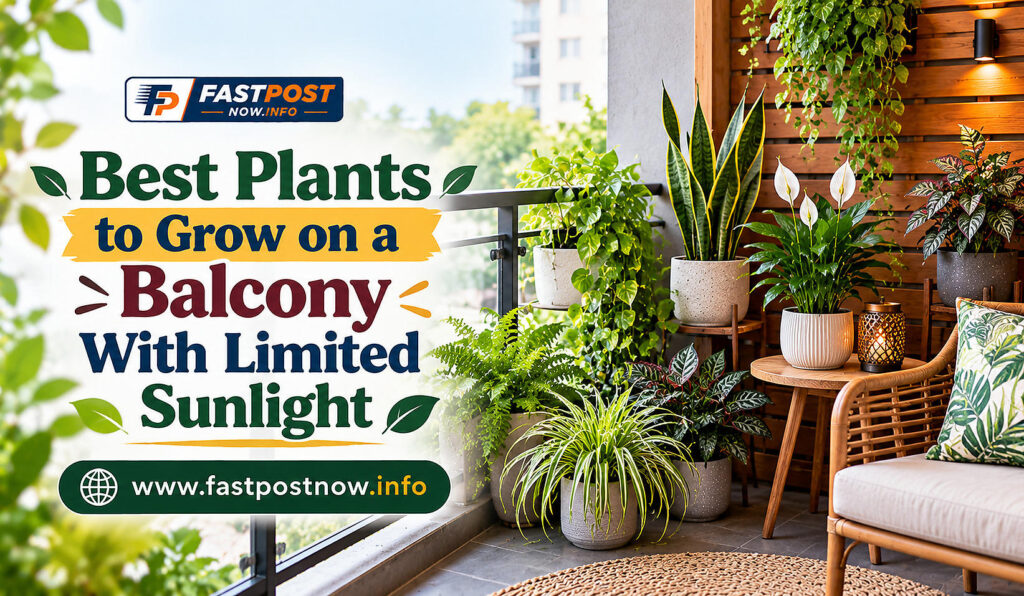
A balcony with limited sunlight can still become a beautiful green space with the right plants and a little planning. Although many popular flowering plants need several hours of direct sunshine, numerous foliage plants, herbs, and shade-tolerant varieties can grow well in bright shade or indirect light. By choosing suitable plants, you can create a relaxing balcony garden without needing a sunny outdoor area.
The key is to understand how much natural light your balcony receives. A balcony that gets bright indirect light for most of the day has different growing conditions from one that receives only a little light through a narrow opening. Moreover, factors such as airflow, humidity, pot size, and watering habits influence how well your plants grow.
Whether you live in an apartment with a north-facing balcony or have a space shaded by nearby buildings, the right plant selection can help you enjoy greenery throughout the year. Here are some of the best plants to consider, along with practical tips for maintaining a healthy balcony garden.
1. Snake Plant for Easy Balcony Gardening
The snake plant is a popular choice for people who want an attractive plant without a complicated care routine. Its upright leaves create a neat appearance, making it suitable for modern balconies, compact corners, and minimalist outdoor spaces.
Snake plants tolerate low light better than many sun-loving varieties. However, they generally grow more slowly in dim conditions and still benefit from some indirect natural light.
How to Care for a Snake Plant
Snake plants prefer well-draining soil and containers with drainage holes. Their thick leaves store water, so they do not require frequent watering.
Follow these basic care tips:
- Place the plant in bright indirect light or a location with some lower-light exposure.
- Allow the soil to dry substantially between waterings.
- Use a well-draining potting mix.
- Avoid leaving water standing in the pot or saucer.
- Protect the plant from cold conditions and prolonged exposure to harsh weather.
Snake plants can work well in floor pots because their upright growth takes up relatively little horizontal space. Keep them away from areas where pets might chew the leaves, as snake plants are toxic if ingested.
2. Pothos for Hanging and Vertical Gardens
Pothos is an excellent option for balconies with indirect light. Its trailing stems and attractive leaves make it suitable for hanging baskets, wall shelves, and elevated plant stands.
Depending on the variety, the leaves may be green, golden, or patterned with lighter markings. This variation allows you to create visual interest without adding many different plants.
Growing Pothos in Limited Sunlight
Pothos can tolerate lower-light conditions, although growth may slow and variegated leaves may become less colourful when light is insufficient.
For healthy growth:
- Provide bright indirect light whenever possible.
- Water when the upper portion of the soil has dried.
- Use a pot with drainage holes.
- Trim long stems to maintain the desired shape.
- Avoid placing the plant in harsh direct afternoon sunlight.
Pothos is particularly useful when floor space is limited because its trailing stems can grow along shelves or hang from suitable supports. However, secure hanging planters carefully, especially on balconies exposed to wind.
Keep pothos out of reach of pets and young children because the plant contains substances that can irritate the mouth if chewed.
3. Peace Lily for Attractive Green Foliage
Peace lilies are known for their glossy green leaves and distinctive white flower-like structures. They can grow in bright indirect light and may tolerate lower-light indoor conditions, making them worth considering for a sheltered balcony.
Although peace lilies are often associated with indoor spaces, they can also suit protected balconies where temperatures remain appropriate and the plants receive enough filtered light.
Peace Lily Care Tips
Peace lilies prefer evenly moist soil but do not tolerate constantly waterlogged roots.
- Place the plant in bright shade or indirect light.
- Water when the upper soil begins to dry.
- Use a container with good drainage.
- Protect the leaves from harsh direct sunlight.
- Monitor the plant during hot or dry weather.
Very low light may limit flowering, so do not expect regular blooms in a dark balcony corner. If flowers are important to you, choose the brightest suitable location available.
Peace lilies are toxic if chewed, so they are not a good choice for households where pets or children may nibble on plants.
4. Spider Plant for a Fresh, Decorative Look
Spider plants have narrow, arching leaves that create a light and graceful appearance. Many varieties produce small offshoots that can be separated and grown into new plants.
This makes the spider plant a practical choice for gardeners who want to expand their collection gradually without purchasing many new pots.
How to Grow Spider Plants
Spider plants generally perform well in bright indirect light and can tolerate some lower-light conditions.
For best results:
- Use loose, well-draining potting soil.
- Water when the upper layer of soil starts to dry.
- Avoid prolonged exposure to strong direct sunlight.
- Remove damaged leaves when necessary.
- Rotate the pot occasionally for more even growth.
A spider plant can look attractive in a hanging basket or on a balcony shelf. Its arching foliage also works well alongside upright plants such as snake plants.
Although spider plants can tolerate some shade, growth may be slower in very dim conditions. A location with indirect daylight will usually produce healthier foliage.
5. Ferns for a Lush, Green Balcony
Ferns are an excellent choice if you prefer a balcony filled with soft, layered greenery. Their delicate fronds can create a relaxed garden atmosphere, especially when arranged in hanging baskets or grouped around a seating area.
Many ferns prefer indirect light and relatively humid conditions. However, their needs vary by species, so it is important to select a fern suited to your local climate and balcony environment.
Caring for Balcony Ferns
Ferns generally prefer moisture-retentive soil, good airflow, and protection from harsh sunlight.
Keep these points in mind:
- Choose a sheltered spot with filtered or indirect light.
- Keep the soil consistently lightly moist without waterlogging it.
- Increase humidity when conditions are very dry.
- Protect delicate fronds from strong winds.
- Remove dry or damaged foliage when needed.
Boston ferns are a popular option for hanging baskets, while other fern varieties may suit shelves or shaded corners. Check the care requirements of your chosen species before purchasing.
If your balcony is hot, dry, and poorly ventilated, some ferns may struggle. In that case, consider more drought-tolerant foliage plants instead.
6. ZZ Plant for Low-Light Corners
The ZZ plant is valued for its glossy leaves, upright stems, and ability to tolerate low-light conditions. It is especially useful for balconies that receive filtered daylight but little direct sunshine.
Its structured appearance suits contemporary homes, and its slow-growing habit means that it does not require constant trimming.
ZZ Plant Maintenance
ZZ plants store water in thick underground rhizomes, so they are more tolerant of dry soil than many tropical foliage plants.
To maintain a healthy plant:
- Place it in indirect light or a location with some lower-light exposure.
- Allow the soil to dry well between waterings.
- Use a free-draining potting mix.
- Avoid leaving the roots in standing water.
- Protect the plant from cold temperatures and harsh weather.
Although the ZZ plant tolerates low light, it still needs some natural light to grow. A completely dark corner will not support healthy long-term growth.
Keep the plant away from pets and children who might chew its leaves, as it can cause irritation if ingested.
7. Aglaonema for Colourful Foliage
Aglaonema, commonly known as Chinese evergreen, is appreciated for its patterned leaves and variety of colours. Depending on the cultivar, its foliage may feature different shades of green, silver, cream, or pink.
Many green-leaved varieties tolerate lower light better than strongly coloured cultivars. This makes Aglaonema a useful option for adding visual variety to a shaded balcony.
Choosing and Caring for Aglaonema
Select a variety suited to the amount of light available. Plants with colourful or strongly patterned leaves may need brighter indirect light to maintain their appearance.
For healthy growth:
- Use bright indirect light where possible.
- Water when the upper soil begins to dry.
- Choose a container with drainage holes.
- Protect the plant from extreme temperatures.
- Avoid prolonged exposure to direct afternoon sunlight.
Aglaonema can be placed in decorative pots near a balcony wall or grouped with other foliage plants. Its compact growth makes it useful for smaller spaces.
Like several other popular houseplants, Aglaonema is toxic if ingested, so keep it away from pets and young children.
8. Mint for a Small Balcony Herb Garden
If you want a useful plant rather than foliage alone, mint is worth considering. It grows well in containers and can provide fresh leaves for drinks, chutneys, and other recipes.
Mint generally grows best with several hours of sunlight or bright indirect light. It can tolerate partial shade, although growth may be weaker in very dim conditions.
How to Grow Mint with Limited Sunlight
Mint needs more light than some foliage plants, so choose the brightest part of your balcony.
- Use a container with drainage holes.
- Keep the soil evenly moist without making it waterlogged.
- Trim stems regularly to encourage bushier growth.
- Harvest leaves as needed.
- Grow mint in its own pot because its spreading roots and stems can crowd neighbouring plants.
In a balcony with limited sunlight, mint may produce fewer leaves or grow more slowly. If the space receives almost no direct sun, consider a leafy ornamental plant instead.
9. Lucky Bamboo for a Simple Decorative Arrangement
Lucky bamboo is a popular decorative plant often grown in water or a suitable potting medium. Its upright stems and narrow leaves create a clean appearance that suits modern balconies and compact decorative corners.
Despite its name, lucky bamboo is not a true bamboo. It generally prefers bright indirect light and can tolerate some lower-light conditions.
Lucky Bamboo Care
You can grow lucky bamboo in a suitable container with clean water or in well-draining soil.
- Keep it away from harsh direct sunlight.
- If growing in water, refresh the water regularly.
- If growing in soil, avoid waterlogging the roots.
- Protect the plant from extreme temperatures.
- Use water suitable for the plant, particularly if your tap water contains high levels of minerals.
Lucky bamboo works well on a stable table or shelf where it receives filtered daylight. However, it should not be left in a dark area indefinitely.
Lucky bamboo is toxic to cats and dogs if ingested, so choose a safer plant if pets have access to the balcony.
10. Cast Iron Plant for Shady Balconies
The cast iron plant is known for its tough, dark green leaves and tolerance of lower-light conditions. It can be a useful choice for a sheltered balcony where many flowering plants struggle.
Its upright leaves provide a structured appearance without needing elaborate pruning or frequent attention.
Cast Iron Plant Care Tips
This plant is relatively adaptable, but it still needs appropriate growing conditions.
- Place it in shade or indirect light.
- Use well-draining soil.
- Water when the soil begins to dry.
- Protect it from intense sunlight and extreme temperatures.
- Remove old or damaged leaves to maintain a neat appearance.
The cast iron plant grows slowly, which can be an advantage when space is limited. However, it may not be available at every local nursery, so check with nearby plant sellers.
11. How to Choose the Right Plants for Your Balcony
Before buying plants, observe your balcony throughout the day. Limited sunlight does not always mean the same thing. Some balconies receive bright reflected daylight, while others remain shaded by nearby buildings or enclosed walls.
Understand Your Light Conditions
Use these general guidelines when selecting plants:
- Bright indirect light: The area receives plenty of daylight but little or no harsh direct sunshine.
- Partial shade: The area receives some direct sunlight, often during part of the day.
- Low light: The area receives limited natural light and may remain shaded for much of the day.
- Deep shade: Very little useful daylight reaches the space.
Plants that tolerate low light may survive in dim conditions, but they will not thrive in complete darkness. If your balcony is exceptionally dark, consider adding suitable grow lights or placing plants in a brighter location indoors when practical.
Consider Temperature and Wind
Balconies can experience stronger winds and greater temperature fluctuations than indoor rooms. An exposed balcony may dry out pots quickly, while a sheltered one may retain humidity.
Choose plants that suit your local climate and protect delicate varieties from strong winds. Also, secure pots and hanging planters to prevent them from falling.
Select the Right Pots and Soil
The container and potting mix affect root health, moisture retention, and plant growth.
- Choose pots with drainage holes.
- Use a potting mix suitable for each plant.
- Avoid oversized containers that retain excess moisture.
- Place saucers beneath pots where appropriate, but empty standing water.
- Select lightweight containers when balcony weight is a concern.
For a neat appearance, choose a small collection of coordinated planters rather than buying many unrelated styles.
12. Simple Tips for Maintaining a Low-Sunlight Balcony Garden
Plants in shaded locations often use water more slowly than those in direct sunlight. However, wind, temperature, and pot size also affect how quickly soil dries. Therefore, check the soil before watering rather than following a fixed daily schedule.
Create a Practical Care Routine
A simple routine can help keep your balcony garden healthy.
- Check the soil: Water according to moisture levels and the plant’s needs.
- Inspect the leaves: Yellowing, brown edges, or drooping may indicate care problems.
- Remove damaged foliage: Trim dead leaves when necessary.
- Clean the leaves: Wipe dusty foliage gently so the leaves remain clean.
- Rotate the pots: Turn plants occasionally if they receive uneven light.
- Check for pests: Inspect the undersides of leaves and new growth regularly.
Avoid fertilising excessively, particularly when plants are growing slowly due to limited light. Follow the product instructions and the needs of each plant.
You can also group plants with similar watering and light requirements. This makes daily care easier and helps create a balanced arrangement.
Even a shaded balcony can become an attractive green corner with the right combination of plants and flooring. Discover these artificial grass balcony design ideas to give your outdoor space a neat and natural look.
Frequently Asked Questions
1. Which plants grow best on a balcony with limited sunlight?
Snake plants, pothos, ZZ plants, spider plants, peace lilies, and suitable fern varieties can tolerate lower-light conditions, although their growth depends on the amount of available natural light.
2. Can flowering plants grow on a shaded balcony?
Some flowering plants can grow in partial shade or bright indirect light, but flowering generally depends on the species and the amount of sunlight available.
3. How often should I water plants on a low-sunlight balcony?
Check the soil before watering because plants in shaded locations may use water more slowly, and excess moisture can damage roots.
4. Can I grow herbs on a balcony that receives little sunlight?
Some herbs, including mint, can tolerate partial shade, but most culinary herbs grow better with several hours of suitable sunlight or bright indirect light.
5. How can I make a shaded balcony look greener?
Use a combination of upright foliage plants, trailing varieties, coordinated planters, and vertical shelves to create a layered arrangement without taking up too much floor space.