
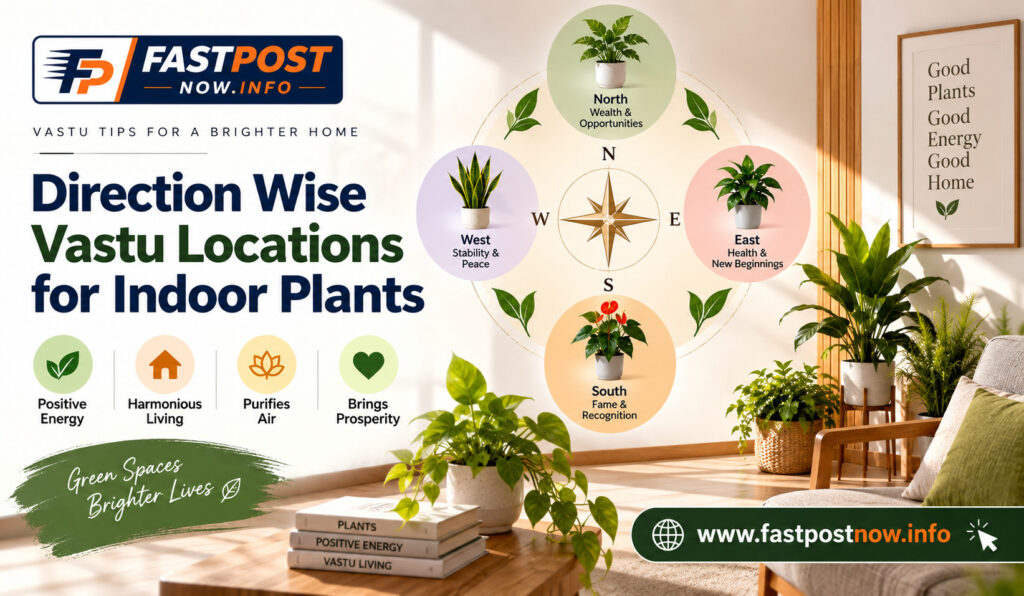
Indoor plants can do much more than make your home look fresh and lively. When you place them thoughtfully, they can become an attractive part of your décor while helping you create a calm and balanced atmosphere. If you follow Vastu principles, the direction in which you keep your plants can also be an important consideration.
Choosing the right Vastu Wise Indoor Plants Direction can help you organize your indoor greenery according to traditional Vastu beliefs. Different directions are associated with different energies, and certain plants are commonly recommended for particular areas of the home.
You do not need to turn your home into a garden to follow these ideas. Even a few carefully selected plants in suitable locations can add greenery without making your rooms feel crowded. Here is a practical guide to placing indoor plants direction-wise according to Vastu principles.
Why Direction Matters for Indoor Plants
According to Vastu Shastra, different directions of a home are traditionally associated with specific elements and energies. The placement of furniture, decorative objects and plants is therefore considered important for maintaining balance.
When you choose an indoor plant, you can consider both its appearance and the direction where you intend to place it. For example, a plant that needs plenty of sunlight may naturally work better near an east-facing window, while a low-light plant can be suitable for another indoor location.
Following Vastu does not mean ignoring the basic needs of your plants. Sunlight, ventilation, watering and temperature should always come first. You can use Vastu principles as an additional guideline when deciding where your plants should go.
Best Vastu Wise Indoor Plants Direction
1. East Direction – Ideal for Fresh Green Plants
The east is traditionally associated with the rising sun and is considered an important direction in Vastu. It can be a suitable location for plants that enjoy natural morning light.
You can place healthy green plants near an east-facing window, balcony or living-room corner. Plants with fresh, rounded or attractive foliage can work particularly well from a décor perspective.
Money plants, bamboo and other easy-care green plants are commonly chosen for indoor spaces. If your east-facing area receives sufficient indirect or gentle morning sunlight, it can become an excellent spot for your greenery.
Avoid turning the area into a dense collection of pots. A few well-maintained plants can look much more attractive than a crowded arrangement.
2. North Direction – Suitable for Money Plants and Greenery
The north direction is another commonly preferred area for indoor plants according to Vastu traditions. Many homeowners associate this direction with growth, opportunities and prosperity.
If you want to introduce a money plant into your home, the north can be considered as one of the preferred locations. You can keep it on a shelf, plant stand or suitable corner where it receives adequate indirect light.
A money plant can also be trained to grow vertically, making it a practical option for apartments and smaller rooms. Just make sure its vines are not allowed to become tangled or unhealthy.
A clean and organized north-facing corner with healthy plants can also add a pleasant visual touch to your home.
3. Northeast Direction – Keep It Light and Clutter-Free
The northeast is considered a sensitive and spiritually significant area in traditional Vastu. Because of this, many Vastu practitioners recommend keeping this part of the home clean, open and uncluttered.
If you want plants in this direction, choose smaller and lighter varieties rather than placing large, heavy planters here. You can consider a small indoor plant that does not dominate the room.
Avoid creating a dark or crowded plant corner in the northeast. Your goal should be to maintain an open and refreshing appearance.
If the northeast area receives natural light, you can use a small plant to add a subtle touch of greenery while keeping the overall space simple.
4. South Direction – Choose Plant Placement Carefully
The south direction is often treated differently from the north and east when discussing Vastu plant placement. Instead of filling this area with numerous plants, you can keep the arrangement controlled and intentional.
If you have a south-facing room, check the plant’s actual lighting requirements before placing it there. Strong sunlight through a window can be beneficial for some plants but damaging to others.
You can use suitable decorative plants in this direction if they are compatible with the available light and temperature. Avoid placing weak, dying or neglected plants anywhere in your home, especially when you are trying to maintain a positive and attractive environment.
5. Southeast Direction – Consider Decorative Green Plants
The southeast is traditionally connected with the fire element in Vastu. If you want to place plants in this area, choose varieties that can comfortably survive the available indoor conditions.
You can use compact green plants as part of your living-room or kitchen décor, provided they receive suitable light and ventilation.
Rather than placing several large pots together, try one or two carefully selected plants. This gives you greenery without making the southeast corner feel heavy or congested.
If your plant is close to a kitchen window, remember to protect it from excessive heat, cooking fumes and sudden temperature changes.
6. West Direction – A Good Option for Certain Indoor Plants
The west direction can also be used for indoor greenery when the plant’s environmental requirements are suitable. You can place medium-sized plants in a living room, study or balcony area.
West-facing windows may receive stronger afternoon sunlight, so you should check whether your plant can tolerate direct light. If it cannot, use a sheer curtain or move the plant slightly away from the window.
From a décor perspective, taller plants can work well in empty western corners. They can fill unused vertical space and make your room appear more balanced.
7. Northwest Direction – Keep Plants Moderate
The northwest direction can be used for plants, but moderation is generally a better approach. Instead of creating a mini indoor jungle, choose a few plants that complement the room.
You can place an attractive floor plant in a northwest corner of your living room or use a small potted plant on a side table.
Make sure the plant does not block doors, windows or pathways. Vastu aside, good circulation and accessibility are important for making your home comfortable.
Best Indoor Plants to Consider for Vastu
Once you understand Vastu Wise Indoor Plants Direction, the next step is selecting plants that suit your lifestyle.
Money Plant
The money plant is one of the most popular choices for Indian homes. It is relatively easy to maintain and can grow in different indoor setups when provided with suitable indirect light.
You can consider placing it in the north or east according to commonly followed Vastu practices.
Lucky Bamboo
Lucky bamboo is often selected as a decorative indoor plant because of its compact size and attractive appearance. It can work well on a desk, shelf or side table.
You can use it in a bright indoor location where it receives suitable indirect light.
Areca Palm
If you have enough floor space, an areca palm can make a room feel more vibrant. Its tall, feathery leaves can add a tropical touch to your interior.
You can place it in a bright living-room corner, provided the plant receives the light and humidity it needs.
Snake Plant
The snake plant is popular because it is relatively low-maintenance and can tolerate lower-light conditions better than many other indoor plants.
Its upright shape also makes it useful when you want greenery without taking up too much floor space.
Tulsi
Tulsi holds a special place in many Indian households. Traditionally, it is often kept in an area with sufficient sunlight and ventilation rather than in a dark indoor corner.
If you keep Tulsi at home, prioritize sunlight, airflow and regular care when selecting its location.
Directions You May Want to Avoid for Certain Plants
Vastu recommendations can vary between traditions and practitioners, so there is no single universal rule for every plant and every home.
However, you can follow a few practical principles. Avoid placing plants where they receive no light at all. Do not keep large plants where they obstruct doors or windows. You should also avoid allowing dead leaves, dry branches or dying plants to accumulate.
If a plant repeatedly struggles in a particular location, move it. A plant’s health should be more important than forcing it to remain in a direction that does not suit its growing requirements.
Where Should You Keep Indoor Plants in Different Rooms?
Living Room
Your living room is one of the easiest places to introduce plants. You can use a larger floor plant in an empty corner or smaller plants on shelves and side tables.
East, north and suitable west-facing areas can be considered when following common Vastu guidelines.
Bedroom
Keep bedroom plants limited rather than overcrowding the space. A small, easy-care plant can add a pleasant decorative element.
Make sure there is enough ventilation and that the plant does not interfere with your movement or sleep area.
Study Room
A small green plant can make your study or work area feel more welcoming. You can place a compact plant near a window or on a desk, provided it does not interfere with your workspace.
Balcony
Your balcony can be an excellent place for plants because it usually provides better natural light and ventilation. You can arrange plants according to their sunlight requirements while also considering your preferred Vastu direction.
Common Mistakes to Avoid
Following Vastu plant placement is not just about choosing a direction. You should also pay attention to plant health and cleanliness.
Avoid keeping:
- Dead or severely damaged plants
- Pots with stagnant or dirty water
- Excessively crowded plant arrangements
- Plants blocking entrances or windows
- Large plants in very small spaces
- Plants in locations unsuitable for their light requirements
A healthy plant can enhance your décor, while a neglected plant can make even a beautifully designed room look untidy.
Final Thoughts
Understanding Vastu Wise Indoor Plants Direction can help you make more thoughtful choices when adding greenery to your home. You can consider the north and east for commonly recommended plants such as money plants, while keeping sensitive areas like the northeast relatively light and uncluttered.
At the same time, you should not treat Vastu as a replacement for basic plant care. Every plant has its own requirements for sunlight, water, humidity and ventilation. When you combine those practical needs with Vastu-inspired placement, you can create an indoor garden that looks attractive and feels comfortable.
The best approach is simple: choose healthy plants, keep your space clean, provide the right growing conditions and place your greenery thoughtfully. With a little planning, even a small apartment can become a fresh and inviting space filled with beautiful indoor plants.