
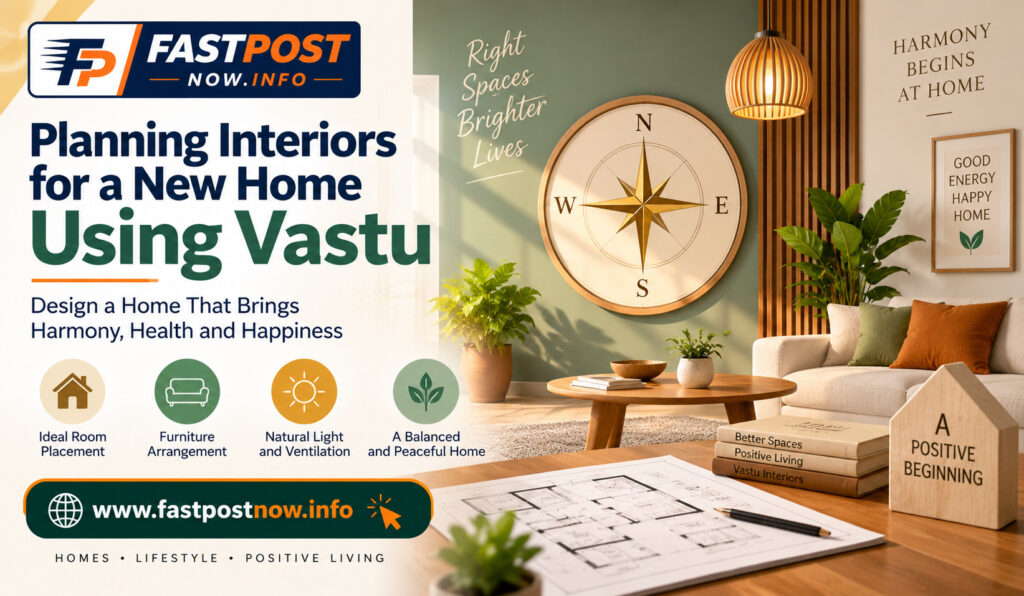
Moving into a new home is an exciting experience. You get the opportunity to choose everything from the wall colours and furniture to the lighting, décor and room layouts. But while planning the look of your home, you may also want to think about how the space feels and functions for you and your family.
This is where Vastu can become part of your interior planning process.
Vastu Shastra is a traditional Indian approach to designing spaces based on directions, elements and the placement of different areas within a home. You don’t necessarily have to redesign your entire house around Vastu. Instead, you can use some of its commonly followed principles while making practical interior choices.
If you’re planning New Home Interiors Using Vastu, the goal should be to create a home that feels comfortable, balanced and welcoming while still matching your personal style. Here’s how you can bring Vastu-inspired ideas into different parts of your new home.
Start With the Direction of Each Room
Before buying furniture or choosing colours, take a look at the direction and location of each room. Vastu traditionally gives importance to the north, south, east and west directions, along with the northeast, southeast, southwest and northwest zones.
You can begin by identifying where your main entrance, living room, kitchen, bedrooms and bathrooms are located.
For example, the northeast is traditionally considered a suitable area for keeping the space light and open, while the southwest is often associated with stability. The southeast is commonly connected with the fire element, making it traditionally preferred for kitchens.
You don’t need to panic if your existing layout doesn’t perfectly match these principles. When you’re working with a completed apartment or builder-provided floor plan, structural changes may not always be practical. Instead, you can focus on furniture placement, colours, lighting and décor.
Create a Welcoming Living Room
Your living room is usually one of the first spaces guests notice, and it’s also where you spend considerable time with family. So, comfort should be your priority.
When planning your living room according to Vastu-inspired principles, try to avoid making the space feel overcrowded. Leave enough room between sofas, tables and other furniture so that movement feels natural.
Heavier furniture such as sofas, cabinets or storage units can traditionally be placed toward the south or west sides of the room, while keeping the north or east portions relatively open.
You can also use natural light wherever possible. Large windows, light curtains and uncluttered surfaces can make the room feel brighter during the day.
For décor, you can choose plants, artwork, wooden elements and subtle decorative pieces rather than filling every corner. A balanced room doesn’t have to be empty; it simply needs enough breathing space.
Choose Colours With the Room in Mind
Colour is one of the easiest ways to incorporate Vastu ideas into your interiors without making major structural changes.
You can choose softer and more relaxing shades for bedrooms and common areas. Cream, beige, light green, pastel blue, soft yellow and other muted tones can help create a calm visual atmosphere.
For a bedroom, you may want to avoid using extremely bright or visually aggressive colours across every wall. Instead, you can introduce stronger colours through cushions, artwork, rugs or accent décor.
Your personal preference should still matter. If you love a particular colour, you don’t have to completely avoid it. You can simply use it in smaller quantities or combine it with neutral shades.
The best interior is one that feels natural to you while maintaining a sense of balance.
Plan Your Bedroom for Comfort and Stability
Your bedroom should feel peaceful, private and comfortable. According to traditional Vastu practices, the southwest direction is often preferred for the master bedroom because it is associated with stability.
If your bedroom is already fixed in another direction, you can still focus on the internal arrangement.
You can position your bed so that there is comfortable access from both sides where possible. Traditionally, keeping the head toward the south or east while sleeping is commonly recommended in Vastu.
Try not to place excessive storage or unnecessary objects around the bed. A clean bedside area can make the room feel much more relaxing.
You can also choose wooden furniture, warm lighting and natural fabrics to create a comfortable environment. Instead of following every rule rigidly, think about how each decision affects your everyday comfort.
Give Your Kitchen the Right Attention
The kitchen is another important area when you’re planning New Home Interiors Using Vastu.
Traditional Vastu associates the southeast direction with the fire element and commonly considers it suitable for a kitchen. The northwest is also sometimes considered an alternative.
Of course, your kitchen location may already be fixed by your home’s construction. In that case, you can focus on the arrangement of appliances and work areas.
You can keep your cooking area organised and avoid unnecessary clutter around the stove. Frequently used appliances should be easy to access, while rarely used items can be stored away.
A well-organised kitchen isn’t just visually attractive. It also makes everyday cooking easier.
For colours, warm and earthy tones can work well in kitchens. You can combine wooden finishes, neutral cabinets and simple lighting to create a pleasant space.
Keep the Entrance Clean and Inviting
The entrance is an important part of Vastu-based home planning. It is traditionally viewed as an area through which energy enters the home.
Whether or not you strictly follow Vastu, keeping your entrance clean and organised is a practical design choice.
Avoid blocking the doorway with large furniture, boxes or unnecessary décor. You can use a small console table, mirror, artwork or indoor plant, depending on the available space.
Good lighting is particularly useful here. A well-lit entrance can instantly make your home feel warmer and more welcoming.
You can also choose a simple nameplate or decorative element that complements your home’s overall design rather than overcrowding the doorway.
Use Natural Light and Ventilation
Natural light and fresh air can make a major difference to how your home feels.
When planning your interiors, avoid covering windows with heavy curtains throughout the day. Use blinds or lightweight curtains that allow you to control sunlight without completely blocking it.
If your home receives good morning sunlight, you can make the most of it by keeping the area around those windows relatively open.
Ventilation is equally important. A home that feels fresh and airy will generally be more comfortable than one filled with excessive furniture and décor.
From a Vastu perspective, open and uncluttered areas are often preferred in certain parts of the home. From a practical interior-design perspective, the same approach can make your rooms appear larger.
Be Thoughtful About Mirrors
Mirrors can make a small room look larger and brighter, but their placement is often discussed in Vastu.
Traditionally, mirror placement is considered direction-sensitive. Rather than randomly placing mirrors wherever there is an empty wall, you can plan them alongside your furniture layout.
Avoid placing a mirror where it creates an uncomfortable reflection, especially opposite the bed if you personally find that distracting.
A mirror near a naturally lit area can help distribute light around the room. You can also use decorative mirrors as statement pieces in entryways, dining areas or living rooms.
Add Plants and Natural Materials
Bringing natural elements indoors can make your home feel calmer and more connected to nature.
Indoor plants can work particularly well in living rooms, balconies and other areas with sufficient natural light. You can choose low-maintenance varieties if you don’t want to spend a lot of time caring for them.
Wood, cotton, jute, bamboo and natural stone can also add warmth to your interiors.
From a design perspective, these materials can prevent a modern home from feeling too cold or artificial. When combined with neutral colours and natural lighting, they can create a comfortable atmosphere.
If you’re following Vastu principles, research the recommended placement of specific plants rather than placing every plant randomly.
Keep Clutter Under Control
One of the simplest ideas you can apply to almost any home is to reduce clutter.
When you move into a new home, it’s tempting to fill every shelf, corner and wall. However, too many objects can quickly make a carefully designed interior feel crowded.
Before buying another decorative item, ask yourself whether you actually need it.
You can use closed storage for items that you don’t want constantly visible. Keep frequently used belongings within easy reach and store seasonal or rarely used things elsewhere.
A clutter-free home can feel more spacious, easier to clean and more relaxing.
Don’t Forget Your Personal Style
While Vastu can guide your interior decisions, your home should still reflect your personality.
You don’t have to create a traditional-looking house just because you’re following Vastu. Modern, minimalist, contemporary, Scandinavian or even luxury interiors can incorporate Vastu-inspired planning.
For example, you can combine a modern sofa with natural materials, use neutral wall colours, introduce indoor plants and arrange furniture according to the available directions.
The key is to find a balance between traditional preferences and modern functionality.
Final Thoughts
Planning New Home Interiors Using Vastu doesn’t have to mean following a long list of complicated rules. You can take the principles that make sense to you and combine them with practical interior design.
Start with the direction of your rooms, then think about furniture placement, colours, lighting, ventilation and storage. Keep important areas uncluttered and make room for natural elements wherever possible.
Most importantly, don’t forget that your home needs to work for your everyday life. A beautiful space isn’t useful if it feels uncomfortable or difficult to maintain.
When you combine Vastu-inspired planning with your own preferences, you can create an interior that feels balanced, functional and genuinely yours. After all, the best new home is not simply one that looks good—it is one where you feel comfortable coming back to every day.