
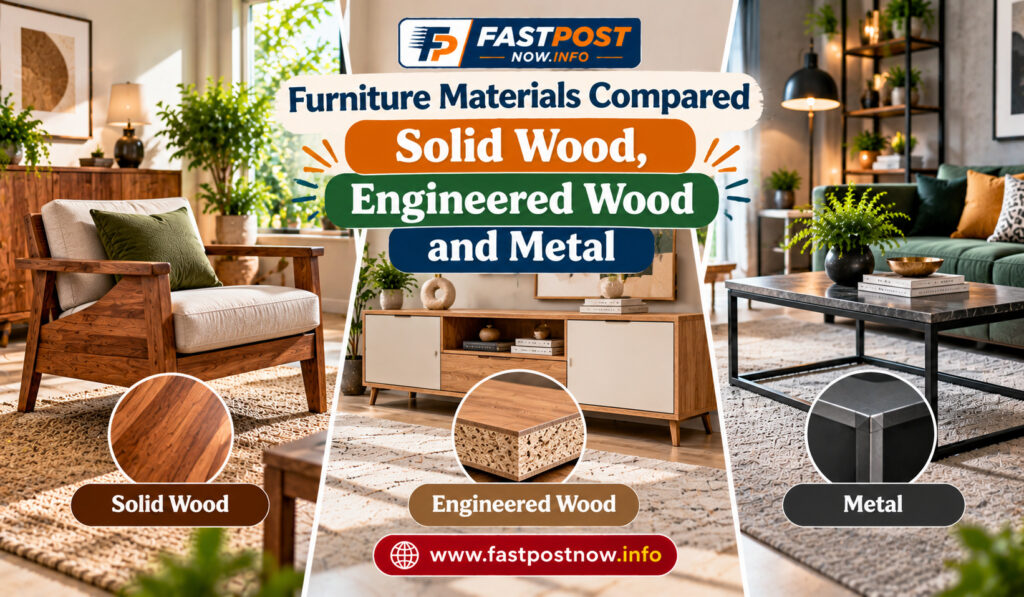
Choosing the right furniture involves more than selecting an attractive design. The material determines how durable a piece will be, how much maintenance it requires, how much it costs, and how well it suits your home. Solid wood, engineered wood, and metal are three popular options, each offering different benefits for modern households.
Solid wood is known for its natural appearance and long-lasting quality. Engineered wood provides flexibility in design and often offers a more budget-friendly alternative. Meanwhile, metal furniture can deliver strength, a contemporary appearance, and practical durability when properly manufactured and maintained.
Understanding these differences can help you make informed decisions when buying beds, wardrobes, dining tables, sofas, storage units, and other household furniture. This guide compares solid wood, engineered wood, and metal to help you choose materials that match your budget, lifestyle, and interior design preferences.
1. Understanding Solid Wood Furniture
Solid wood furniture is manufactured from natural timber rather than wood fibres or layers bonded together to create a board. Common choices include teak, oak, sheesham, mango wood, and pine. Each species has its own grain pattern, colour, density, and working characteristics.
Because solid wood retains its natural structure, every piece can have a slightly different appearance. This variation gives wooden furniture a distinctive character that works well in traditional, rustic, farmhouse, and contemporary interiors.
Advantages of Solid Wood
Solid wood is popular among homeowners who value durability, natural textures, and furniture that can remain useful for many years.
Its main advantages include:
- Long-lasting construction: Well-made solid wood furniture can serve households for decades with suitable care.
- Natural appearance: Grain patterns and colour variations give each piece a distinctive look.
- Repairability: Scratches, dents, and worn finishes can often be repaired or refinished.
- Design versatility: Solid wood works with traditional carvings, simple modern shapes, and many decorative finishes.
- Potential for restoration: Older furniture can sometimes be restored rather than replaced.
Another benefit is its ability to develop character over time. Some homeowners appreciate the subtle changes in colour and surface that occur as natural wood ages.
Disadvantages of Solid Wood
Although solid wood offers several advantages, it also has limitations that deserve consideration before purchasing.
- Higher cost: Quality hardwood furniture can be more expensive than many engineered wood alternatives.
- Weight: Some solid wood pieces are heavy and difficult to move.
- Moisture sensitivity: Changes in humidity can cause wood to expand, contract, or develop cracks.
- Maintenance requirements: Certain finishes need periodic care to preserve their appearance.
- Natural variations: Knots, grain differences, and colour variations may be unsuitable for buyers who prefer a completely uniform finish.
Solid wood is not automatically superior in every situation. Its performance depends on the timber species, seasoning, construction quality, joinery, and finish.
Best Uses for Solid Wood
Solid wood is a strong option for dining tables, bed frames, coffee tables, bookshelves, and selected storage furniture. It is particularly suitable for pieces that receive frequent use or are intended to remain in a home for a long time.
For example, a well-constructed solid wood dining table can become a central feature of a family dining area. Similarly, a wooden bed frame can provide a warm appearance while supporting regular use.
When buying solid wood furniture, ask about the wood species, construction method, finish, and care requirements. These details are more useful than relying on the label alone.
2. Understanding Engineered Wood Furniture
Engineered wood is manufactured by combining wood fibres, particles, strands, or veneers with adhesives and other materials to create boards. The category includes medium-density fibreboard (MDF), particleboard, plywood, and oriented strand board (OSB), although these products have different structures and uses.
Engineered wood is widely used in modern furniture because manufacturers can produce boards in consistent sizes and use them to create a variety of shapes and finishes. Depending on the product, the surface may be covered with laminate, veneer, paint, or decorative paper.
Advantages of Engineered Wood
Engineered wood can be a practical choice for homeowners who want functional furniture at a manageable price.
Its main benefits include:
- Budget-friendly options: Many engineered wood products cost less than comparable solid wood furniture.
- Consistent surfaces: Manufactured boards often provide uniform surfaces suitable for modern finishes.
- Design flexibility: They can be cut into different shapes and used in modular furniture systems.
- Wide range of finishes: Laminate, veneer, and painted surfaces offer many colour and texture options.
- Efficient material use: Some engineered wood products use wood fibres, particles, or smaller wood pieces that might otherwise have limited applications.
Engineered wood is especially useful for contemporary wardrobes, office desks, television units, cabinets, and modular kitchen furniture. It allows manufacturers to create coordinated furniture collections with consistent dimensions and appearances.
Disadvantages of Engineered Wood
The performance of engineered wood depends heavily on its type, quality, thickness, construction, and exposure to moisture.
Potential disadvantages include:
- Moisture damage: Some boards can swell, weaken, or lose their finish when exposed to water.
- Limited repair options: Deep damage to a laminated or coated surface may be difficult to repair invisibly.
- Fastener limitations: Screws and hinges may loosen in certain boards, especially after repeated stress or poor installation.
- Variable durability: Low-quality products may wear out sooner than well-made alternatives.
- Replacement challenges: A damaged panel may need to be replaced if refinishing is not practical.
Not all engineered wood performs the same way. For instance, plywood and particleboard have different structures, strengths, and moisture responses. Therefore, buyers should compare the specific board type instead of treating all engineered wood as one material.
Best Uses for Engineered Wood
Engineered wood is suitable for wardrobes, modular storage systems, study desks, bookshelves, bedside tables, and television cabinets. It can be especially useful when you need several matching furniture pieces without spending heavily on solid timber.
For example, a laminated engineered wood wardrobe can provide organised storage and a clean modern finish. A modular study desk can also include drawers, shelves, and cable-management features without requiring a solid wood construction.
Before buying, check the board type, edge sealing, hardware quality, load capacity, and manufacturer’s moisture-care guidance. These details can significantly affect the furniture’s service life.
3. Understanding Metal Furniture
Metal furniture is made using materials such as steel, stainless steel, aluminium, or iron. The choice of metal affects the product’s weight, strength, resistance to corrosion, and overall appearance.
Metal is commonly used in bed frames, office chairs, shelving units, dining chairs, outdoor furniture, and industrial-style tables. It can also be combined with wood, glass, or upholstered surfaces to create mixed-material designs.
Advantages of Metal
Metal furniture can be a practical option for households that need sturdy construction and a contemporary appearance.
Key advantages include:
- Structural strength: Properly designed metal frames can support substantial loads.
- Modern appearance: Metal suits industrial, minimalist, and contemporary interiors.
- Slim construction: Some metal frames provide support without requiring bulky components.
- Easy cleaning: Many finished metal surfaces can be cleaned with a soft cloth and suitable cleaner.
- Design flexibility: Metal can be formed into simple frames, curved structures, and decorative shapes.
Certain metals are also suitable for outdoor furniture. However, the finish, alloy, exposure conditions, and maintenance requirements determine how well the product withstands weather.
Disadvantages of Metal
Metal furniture has several practical limitations.
- Corrosion risk: Some metals can rust when protective coatings are damaged or moisture exposure is prolonged.
- Surface temperature: Metal can feel cold in winter and become hot when exposed to direct sunlight.
- Noise: Loose joints or metal components rubbing together may create squeaks or rattling.
- Weight differences: Steel and iron furniture can be heavy, while some aluminium designs are much lighter.
- Surface scratches: Painted or coated finishes can become damaged through impacts and regular use.
Metal furniture can also feel less visually warm than wood when used extensively in a living space. However, pairing metal frames with wooden surfaces, cushions, or soft furnishings can create a more balanced appearance.
Best Uses for Metal
Metal is well suited to bed frames, office furniture, storage racks, dining chair frames, and furniture that needs a sturdy supporting structure.
A steel bed frame can suit a minimalist bedroom, while an aluminium outdoor chair may be convenient for moving around a patio. Metal shelving can also provide practical storage in utility rooms, home offices, and garages.
When selecting metal furniture, examine the joints, welds, finish, and stability. For outdoor use, check whether the material and coating are appropriate for the local climate and expected exposure to rain or humidity.
4. Solid Wood vs Engineered Wood vs Metal
Each material serves a different purpose. Rather than choosing one material for every room, compare their characteristics against your priorities.
Durability and Strength
Solid wood can be highly durable when the timber is properly prepared and the furniture is well constructed. Engineered wood varies considerably by board type and quality, while metal frames can provide excellent structural strength when designed for the intended load.
However, durability depends on more than the material itself. Weak joints, poor hardware, unsuitable finishes, and incorrect installation can reduce the service life of any furniture piece.
Cost and Value
Engineered wood is often the most affordable option for large storage units and modular furniture. Solid wood may require a higher initial investment, particularly when made from quality hardwood. Metal furniture varies in price depending on the metal, finish, design, and manufacturing quality.
When comparing prices, consider the expected service life, repair possibilities, warranty, and replacement costs rather than focusing only on the initial purchase price.
Appearance and Style
Solid wood adds natural grain and warmth. Engineered wood offers a broad selection of uniform colours, patterns, and finishes. Metal contributes clean lines, structural detail, and an industrial or contemporary appearance.
Your existing decor can guide the choice. A natural wooden dining table may complement a warm interior, while a metal-framed desk can suit a modern workspace.
Maintenance Requirements
Solid wood may need protection from excessive moisture, heat, and scratches. Engineered wood generally benefits from prompt spill removal and careful handling around edges and joints. Metal needs suitable cleaning and protection against corrosion where relevant.
The best choice is the one whose maintenance requirements fit your routine and environment.
5. How to Choose the Right Furniture Material
Before buying furniture, consider how the item will be used and the conditions in which it will remain.
Consider Your Budget
Set a realistic budget before comparing products. If you need to furnish several rooms, engineered wood can help create a coordinated appearance at a lower initial cost. You might reserve solid wood for frequently used statement pieces and choose metal for selected frames or storage solutions.
Evaluate Your Lifestyle
Households with children, pets, or frequent visitors may need furniture that handles regular use and occasional impacts. In these situations, look beyond the material name and examine the finish, construction, stability, and ease of cleaning.
Ask yourself:
- Will the furniture support heavy or frequent use?
- Is the room exposed to humidity or direct sunlight?
- Will you need to move the furniture regularly?
- Do you prefer furniture that can be repaired or refinished?
- How much time can you spend on maintenance?
Your answers will help narrow down the most practical options.
Match the Material to the Room
Different rooms have different requirements. Bedrooms often benefit from sturdy bed frames and practical wardrobes. Living rooms may need a balance of visual appeal and everyday durability. Home offices require stable desks and comfortable seating, while utility areas may benefit from metal shelving.
Moisture-prone spaces require particular care. Do not assume that every engineered wood board or metal finish is suitable for damp conditions. Confirm the manufacturer’s recommendations before installation.
Check Quality Before Purchasing
Inspect the product carefully, whether you are buying online or in a showroom.
- Check joints, edges, and supporting structures.
- Look for smooth finishes and securely attached hardware.
- Review weight limits for shelves, tables, and bed frames.
- Ask about assembly, cleaning, and repair instructions.
- Check the warranty and availability of replacement components.
These steps help you judge the actual product rather than relying solely on marketing descriptions.
6. Can You Combine Solid Wood, Engineered Wood, and Metal?
Yes. Combining materials can create attractive furniture while balancing cost, strength, and appearance. Many modern furniture designs use more than one material to achieve these goals.
For example, a dining table may feature a solid wood top with metal legs. A wardrobe may use engineered wood panels with metal handles and fittings. A bed frame may combine a metal structure with wooden headboard panels.
To create a coordinated look:
- Repeat one material or finish in more than one place.
- Balance warm wood tones with neutral metal finishes.
- Choose complementary colours for upholstered and hard surfaces.
- Avoid combining too many unrelated finishes in a small room.
- Prioritise secure joints and compatible components over appearance alone.
Mixed-material furniture can be especially useful when you want a contemporary interior that feels warm rather than overly industrial. With thoughtful selection, different materials can work together without making the room feel visually busy.
While comparing furniture materials, it is also important to consider how different sofa styles and structures suit your living space. Read this guide on how to choose the right sofa for your living room to make a more informed choice.
Frequently Asked Questions
1. Which furniture material is the most durable?
Solid wood and well-designed metal furniture can both be highly durable, but actual performance depends on material quality, construction, finish, maintenance, and how the furniture is used.
2. Is engineered wood suitable for everyday furniture?
Yes, quality engineered wood is suitable for everyday furniture such as wardrobes, desks, cabinets, and television units when the product is appropriate for its intended use and protected from unsuitable moisture exposure.
3. Is solid wood furniture worth the higher price?
Solid wood furniture can be worth the investment if you value natural grain, repairability, and long-term use, provided the timber and construction quality justify the cost.
4. Does metal furniture rust easily?
Some metals, particularly untreated or inadequately protected steel and iron, can rust when exposed to moisture, while suitable coatings and corrosion-resistant materials can reduce this risk.
5. Can solid wood, engineered wood, and metal furniture be used together?
Yes, combining these materials can create a balanced interior, provided their colours, finishes, proportions, and construction quality complement one another.