
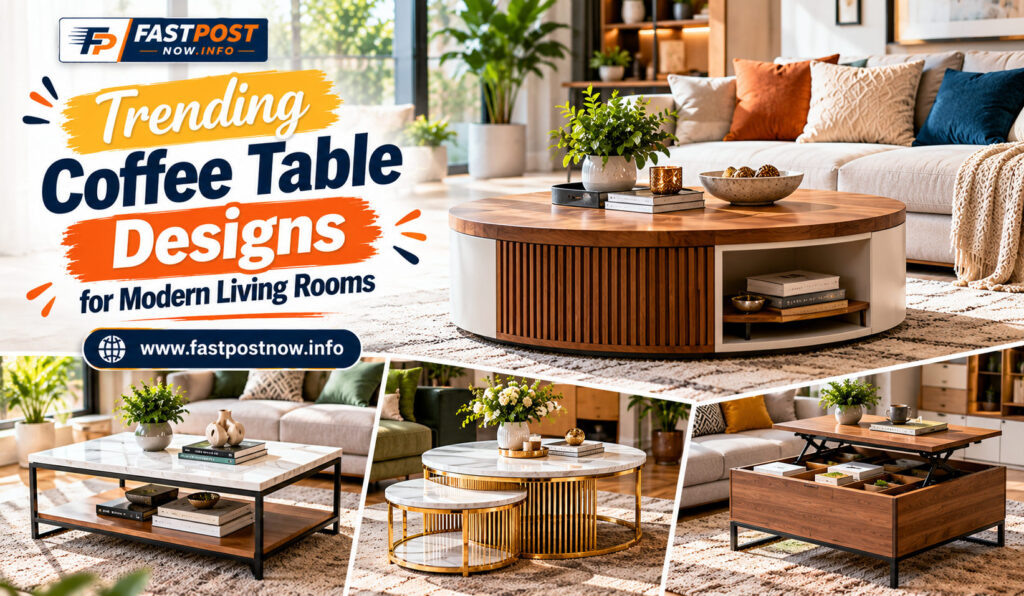
A coffee table is more than a convenient place to keep your drinks, books, and remote controls. It can become the centrepiece of your living room, connect your seating arrangement, and enhance the overall appearance of your home. With the right design, you can create a space that feels stylish, organised, and comfortable without changing all your existing furniture.
Today, coffee tables are available in a wide range of shapes, materials, colours, and finishes. From elegant marble tops to warm wooden surfaces and space-saving nesting tables, there are options for almost every interior style. Moreover, modern designs combine attractive details with practical features, making them suitable for both compact apartments and spacious family homes.
If you are planning to refresh your living room, exploring trending coffee table designs can help you find a piece that matches your furniture, lifestyle, and available space.
1. Round Coffee Tables for a Soft, Modern Look
Round coffee tables are an excellent choice for contemporary living rooms. Their curved edges create a softer appearance and balance the straight lines of sofas, cabinets, and television units. In addition, their shape can make it easier to move around the seating area.
These tables work particularly well in small apartments, cosy family rooms, and living spaces with curved or compact sofas. A round table with a simple wooden top can create a warm atmosphere, while a design with a metal base adds a modern touch.
How to Style a Round Coffee Table
Consider these ideas when choosing and styling a round table:
- Select a light wood finish for a bright, relaxed interior.
- Choose a black or bronze base for a contemporary appearance.
- Add a small decorative tray to organise everyday items.
- Keep the tabletop relatively clear to maintain a neat look.
Before purchasing, measure the space between your sofa and other furniture. A round table should provide enough surface area for daily use without making the room difficult to navigate.
2. Marble Coffee Tables for an Elegant Interior
Marble coffee tables remain a popular option for homeowners who prefer a refined and sophisticated living room. Their distinctive veining creates visual interest, while the smooth surface complements modern sofas and decorative accessories.
White marble with grey veining suits neutral interiors, whereas darker stone finishes can create a dramatic focal point. You can also choose a marble-effect tabletop if you want a similar appearance at a different price point.
Choosing the Right Marble Finish
A marble coffee table looks particularly attractive alongside cream upholstery, wooden flooring, metallic accents, and soft lighting. However, natural marble requires appropriate care because some spills can stain or damage its surface.
Keep these practical points in mind:
- Use coasters to protect the tabletop from drinks.
- Wipe spills promptly with a suitable cleaning cloth.
- Check whether the stone needs periodic sealing.
- Consider engineered stone or a marble-effect finish if maintenance is a concern.
For a balanced design, pair a substantial stone top with a simple base. This approach allows the material to stand out without overwhelming the rest of the room.
3. Wooden Coffee Tables for Timeless Appeal
Wooden coffee tables remain a dependable choice because they complement many interior styles. Whether your living room features traditional furniture or a modern minimalist layout, a wooden table can introduce warmth and natural texture.
Light oak-inspired finishes work well with Scandinavian interiors, while walnut shades create a richer appearance. Sheesham and other hardwood options can also suit Indian homes where durable, natural-looking furniture is preferred.
Popular Wooden Coffee Table Styles
You can choose from several designs depending on your requirements:
- Minimalist wooden tables: These feature clean lines and simple shapes that suit contemporary spaces.
- Rustic wooden tables: Visible grain and textured finishes create a relaxed, natural atmosphere.
- Geometric wooden tables: Distinctive bases and angular silhouettes add character to modern interiors.
- Wooden tables with storage: Drawers or lower shelves help keep everyday essentials organised.
When buying a wooden coffee table, examine the construction, finish, and stability. Also, consider the amount of maintenance required and whether the material is suitable for your household.
4. Glass Coffee Tables for Small Living Rooms
Glass coffee tables can make a compact living room feel more open because their transparent surfaces allow more of the surrounding space to remain visible. This feature makes them especially useful when you want practical furniture without adding too much visual weight.
A clear glass top with slim metal legs creates a sleek contemporary appearance. Alternatively, smoked or tinted glass can introduce a stronger design element while preserving some visual lightness.
Tips for Choosing Glass Tables
Glass designs work well with modern sofas, compact seating arrangements, and interiors that already contain several furniture pieces. However, fingerprints and dust may be more noticeable on transparent surfaces.
Before selecting one, consider the following:
- Choose appropriately rated safety glass.
- Look for stable legs and secure tabletop fittings.
- Consider rounded corners if children use the room.
- Avoid oversized designs that interfere with walking space.
A glass coffee table is particularly effective when you want the rug or flooring beneath it to remain visible. Nevertheless, practical care and household safety should influence your final decision.
5. Nesting Coffee Tables for Flexible Spaces
Nesting coffee tables consist of two or more tables designed to fit beneath or beside one another. They offer flexibility because you can keep them together when space is limited and separate them when you need additional surfaces.
This design is useful for apartments, multipurpose living rooms, and homes where guests frequently visit. Smaller tables can also serve as temporary side tables when extra seating is required.
Why Nesting Tables Are Practical
Nesting tables offer several everyday advantages:
- They provide additional tabletop space when needed.
- They can be arranged in different configurations.
- They suit compact rooms where a large table may feel restrictive.
- They introduce depth through different heights and sizes.
For a coordinated appearance, choose tables that share similar materials or finishes. For example, a wooden top paired with a black metal frame can complement a contemporary living room.
However, check the dimensions of every table before buying. Even a nesting set needs enough surrounding space to remain comfortable and accessible.
6. Sculptural Coffee Tables for Statement Interiors
Sculptural coffee tables turn ordinary furniture into a decorative feature. Rather than relying on elaborate accessories, these designs use distinctive shapes, artistic bases, unusual proportions, or expressive materials to attract attention.
Popular options include pedestal tables, asymmetrical tops, pebble-inspired silhouettes, and chunky geometric forms. Their distinctive appearance makes them suitable for contemporary homes where furniture serves both a functional and decorative purpose.
Making a Sculptural Table Work
A sculptural coffee table often looks best when the surrounding furniture is relatively simple. This creates a visual balance and allows the table to become the main attraction.
For example, a bold pedestal design can complement a plain neutral sofa. Similarly, an organically shaped wooden table can soften a living room filled with straight lines.
Follow these suggestions when choosing a statement design:
- Match the table’s scale to the size of your seating area.
- Avoid combining too many competing patterns and shapes.
- Keep decorative accessories simple.
- Check that the base provides sufficient stability.
Although unusual designs can look impressive, remember that the table should still provide a useful surface for your everyday activities.
7. Coffee Tables with Hidden Storage
Storage coffee tables are an effective solution for living rooms that need to remain tidy. They combine a central surface with drawers, compartments, shelves, or lift-top mechanisms that keep frequently used objects within reach.
This design is especially useful in smaller homes, where additional storage can reduce clutter without requiring another cabinet.
Types of Storage Coffee Tables
Different storage features serve different purposes.
Lift-top coffee tables: The tabletop rises to create a more accessible surface for working, reading, or eating.
Drawer coffee tables: These provide concealed storage for remotes, chargers, stationery, and small household items.
Open-shelf designs: A lower shelf offers space for books, baskets, or decorative objects.
Compartment tables: Hidden sections help organise items that you prefer to keep out of sight.
When selecting a storage table, consider how often you will use its compartments. Make sure drawers open easily and that lift-top mechanisms operate smoothly and safely. A practical design should simplify your routine rather than make everyday items harder to reach.
8. Metal and Wood Coffee Tables for an Industrial Look
Combining wood and metal creates a balanced appearance that feels both modern and durable. The wooden surface adds warmth, while the metal frame introduces a crisp, structured finish.
Black metal legs paired with a natural wood top are particularly versatile. Bronze or brass-coloured details can create a softer, more refined appearance, while brushed steel works well in sleek contemporary interiors.
How to Match Mixed Materials
The key is to coordinate the table with existing finishes. If your television unit features dark metal handles, a coffee table with a similar frame can create continuity. Likewise, a wooden tabletop that matches nearby furniture can make the arrangement feel intentional.
For a cohesive living room:
- Limit the number of competing metal finishes.
- Repeat the wood tone elsewhere in the room.
- Pair darker frames with lighter upholstery for contrast.
- Choose a design with sturdy joints and a stable base.
Mixed-material tables can suit industrial, minimalist, and modern interiors. They are also useful when you want a table that looks distinctive without relying on an elaborate silhouette.
9. Fluted Coffee Tables for Added Texture
Fluted coffee tables feature repeated vertical grooves or ribbed detailing on their sides, bases, or cabinet fronts. This texture gives simple furniture a more decorative appearance without requiring bright colours or complicated patterns.
Fluted designs are available in wood, engineered materials, and other finishes. They can complement contemporary interiors, particularly when paired with plain sofas, textured rugs, and understated accessories.
Styling a Fluted Coffee Table
A fluted table can create visual interest even when the tabletop is relatively simple. Choose a finish that complements your existing furniture, such as natural wood, warm brown, cream, or a deeper contemporary shade.
To keep the overall design balanced:
- Pair textured furniture with simple upholstery.
- Use a tray or bowl rather than numerous small accessories.
- Coordinate the finish with nearby cabinets or side tables.
- Avoid crowding the tabletop with decorative objects.
This design is a good option if you want a modern coffee table that feels detailed and distinctive without appearing overly decorative.
10. Minimalist Coffee Tables for Clean Interiors
Minimalist coffee tables focus on simplicity, useful proportions, and uncluttered shapes. They often feature straight lines, understated colours, and limited ornamentation, making them easy to coordinate with different furniture styles.
A simple rectangular wooden table, a slim metal design, or a low-profile table in a neutral finish can all suit a minimalist living room.
Creating a Minimalist Coffee Table Arrangement
Start by selecting a table that fits comfortably within your seating layout. Then, use only a few accessories to maintain an open appearance.
You might add:
- A small tray for remotes and coasters.
- One decorative bowl or ceramic object.
- A short stack of books.
- A small plant, if it suits the room’s lighting and layout.
The goal is not to remove every personal detail. Instead, choose items that have a purpose or add meaningful character. This approach keeps the living room functional while allowing the coffee table’s design to stand out.
11. How to Choose the Best Coffee Table for Your Living Room
A trending design may look attractive in a showroom, but the right choice depends on your room’s dimensions, furniture arrangement, and daily needs.
Measure the Available Space
Measure the area between your sofa, armchairs, and other furniture before choosing a table. As a practical starting point, leave approximately 30–45 cm between the coffee table and the sofa, adjusting the clearance to suit your layout and walking needs.
The table should be easy to reach without obstructing movement. Also, check the width of nearby pathways and the space needed to open drawers or move nesting tables.
Match the Table to Your Sofa
Your coffee table should complement the size and shape of your sofa. A rectangular design often works well with a long sofa, while a round or oval table can suit compact seating arrangements and curved furniture.
As a general guide, a table around two-thirds the length of the sofa can create balanced proportions. However, this is not a strict rule; the actual dimensions of your room should guide the decision.
Consider Height and Daily Use
Choose a table that is comfortable to reach from your seating. A tabletop close to the height of the sofa seat, or slightly lower, is often practical.
Think about how you use the living room. If you frequently eat snacks, work on a laptop, or host guests, prioritise an accessible surface. If you mainly use the table for display, you may prefer a more sculptural or minimalist design.
Select a Suitable Material
Each material has different advantages. Wood provides warmth, glass preserves visual openness, and stone introduces a distinctive finish. Metal frames can add structure, while engineered surfaces may offer practical alternatives to some natural materials.
Compare durability, maintenance, household safety, and budget before making your decision. A well-chosen table should complement your decor while remaining suitable for everyday use.
12. Simple Ways to Style Your Coffee Table
Even a beautifully designed coffee table can look untidy if its surface becomes crowded. Thoughtful styling helps you highlight the table while keeping it useful.
Start with a tray to group smaller objects. Then, add one or two decorative elements, such as a ceramic bowl, a small vase, or a stack of books. If you enjoy greenery, consider a small plant or a simple floral arrangement.
Use these styling tips to create a balanced appearance:
- Create different heights: Combine a low tray with a slightly taller vase or ornament.
- Keep enough empty space: Leave room for drinks, books, and everyday items.
- Coordinate colours: Repeat one or two shades from your cushions, rug, or curtains.
- Mix textures carefully: Pair wood with ceramic, glass with fabric, or stone with a soft decorative accent.
- Avoid unnecessary clutter: Store remotes and chargers in a drawer or basket when possible.
Most importantly, choose accessories that reflect your preferences. Your coffee table should feel connected to the rest of your home rather than styled only for appearance.
Wooden coffee tables remain a popular choice because they add warmth and a timeless appeal to modern living rooms. Explore these modern wooden furniture designs that never go out of style for more interior inspiration.
Frequently Asked Questions
1. Which coffee table design is trending for modern living rooms?
Round and organic shapes, sculptural designs, natural wood finishes, stone tops, fluted detailing, and nesting tables are popular choices for contemporary living rooms.
2. Which coffee table is best for a small living room?
Round tables, nesting sets, glass designs, and compact tables with hidden storage can work well in small living rooms because they help preserve movement and make efficient use of available space.
3. What is the best material for a modern coffee table?
Wood, glass, marble, engineered stone, and metal can all work well, so the best material depends on your preferred appearance, maintenance requirements, budget, and household needs.
4. How do I choose the right coffee table size?
Measure the seating area, choose a table that complements your sofa’s proportions, and leave enough clearance for comfortable movement and easy access.
5. How can I decorate a coffee table without making it look cluttered?
Use a small tray, one or two decorative objects, and perhaps a few books or a small plant while leaving enough clear surface for everyday use.